What Does PLPD Actually Cover? A MichiganDriver's Guide
If you've ever looked at your auto insurance policy and wondered what PLPD actually covers, you're not alone. Many Michigan drivers carry PLPD because it satisfies the state's minimum insurance requirements, but many don't fully understand what it protects. Knowing how your coverage works today can help you avoid expensive surprises after an accident.
What Is PLPD?
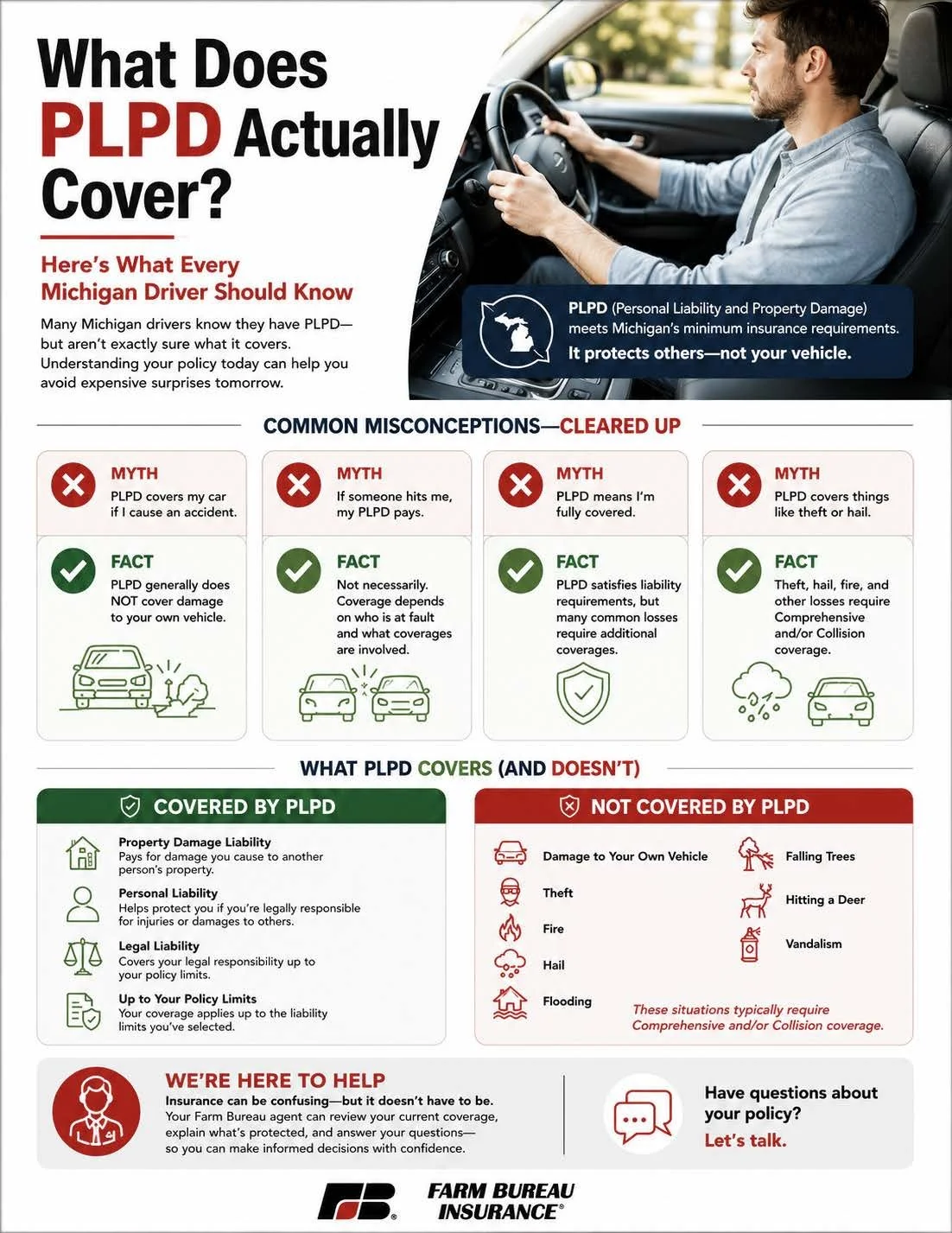
PLPD stands for Personal Liability and Property Damage. Its purpose is to protect other people when you're legally responsible for causing injuries or property damage. It generally does not pay to repair or replace your own vehicle.
What PLPD Covers
• Property damage liability
• Personal liability protection
• Legal liability up to your policy limits
What PLPD Does Not Cover
PLPD generally does not cover damage to your own vehicle, theft, fire, hail, flooding, vandalism, falling trees, or hitting a deer. These situations often require Comprehensive and/or Collision coverage.
Is PLPD Enough?
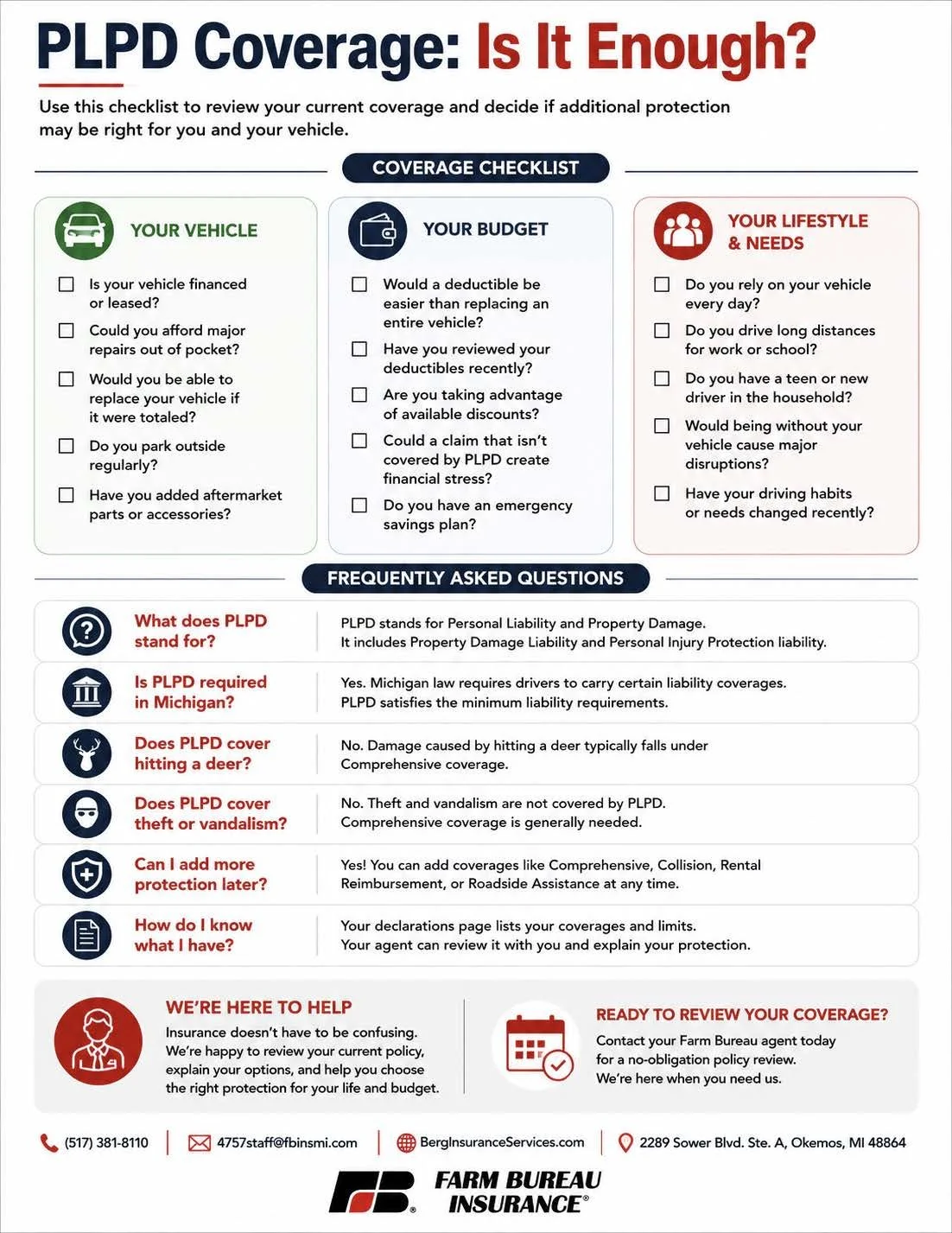
The answer depends on your vehicle, your budget, and how you use your car. If replacing or repairing your vehicle out of pocket would create financial hardship, it may be worth reviewing additional coverages with your insurance agent.
Frequently Asked Questions
Is PLPD required in Michigan?
Yes. It satisfies Michigan's minimum liability insurance requirements.
Does PLPD cover hitting a deer?
No. That is typically covered by Comprehensive coverage.
Can I add more coverage later?
Yes. You can usually add options like Comprehensive, Collision, Rental Reimbursement, and Roadside Assistance.
PLPD is an important foundation of every Michigan auto insurance policy, but it doesn't protect against every type of loss. Reviewing your policy and understanding your options can help ensure you have the protection that fits your needs.